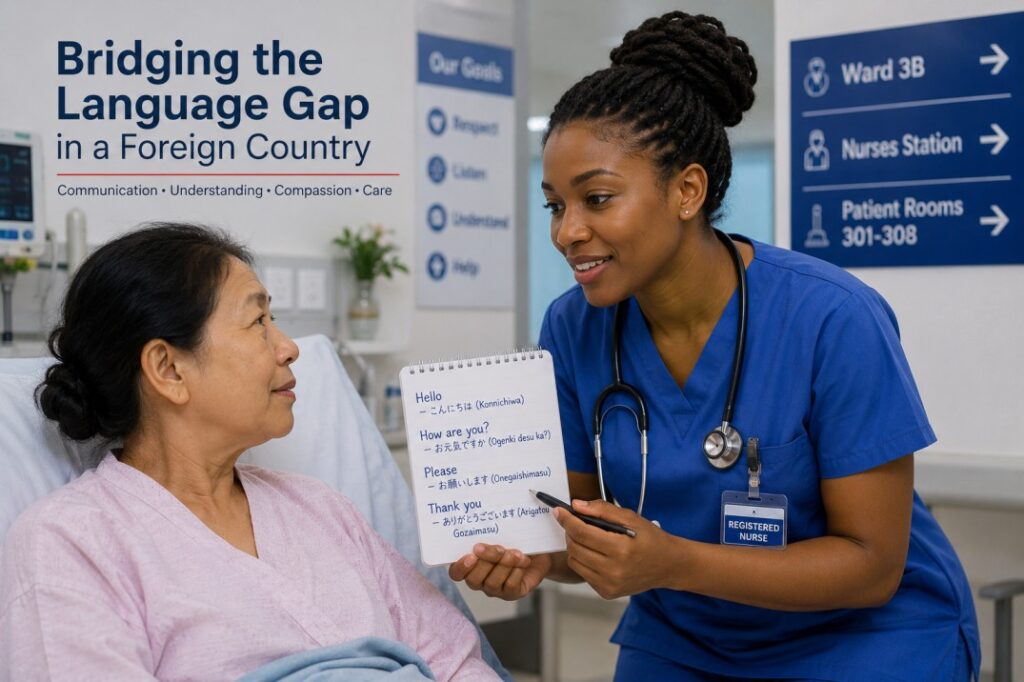
Relocating to a foreign country as a nurse or healthcare professional is an exciting opportunity for career growth and personal development. However, one of the biggest challenges many international healthcare workers face is the language barrier. Even in countries where English is the primary language, differences in accents, medical terminology, cultural expressions, and communication styles can create misunderstandings that affect both patient care and workplace relationships.
Bridging the language gap is not about speaking perfect English or mastering a new language overnight. It is about developing the confidence and communication skills needed to provide safe, compassionate, and effective healthcare.
1. Learn the Local Healthcare Language
Medical terminology may be universal, but everyday expressions vary from country to country. Patients often describe symptoms using local phrases, slang, or cultural expressions that may be unfamiliar. Spend time learning common healthcare terms, local pronunciations, and frequently used expressions to improve communication.
2. Listen More Than You Speak
Good communication begins with active listening. Pay close attention to how patients and colleagues speak, their tone, and the words they use. Listening carefully helps you understand different accents and communication styles while reducing the chances of misunderstanding important information.
3. Never Be Afraid to Ask for Clarification
If you do not understand a patient’s question or a colleague’s instruction, politely ask them to repeat or explain it. Clarifying information is a sign of professionalism and commitment to patient safety, not a weakness.
4. Improve Your Communication Every Day
Language skills improve through consistent practice. Read healthcare materials, watch local news, listen to conversations, and practice speaking with colleagues. Every interaction is an opportunity to become more confident and fluent.
5. Learn About Cultural Communication
Communication involves more than words. Different cultures have different expectations regarding eye contact, greetings, personal space, body language, and professional etiquette. Understanding these cultural differences helps you build trust with patients and work effectively within healthcare teams.
6. Use Simple and Clear Language
Avoid unnecessary medical jargon when speaking with patients. Explain procedures, medications, and treatment plans using simple, respectful language that patients can easily understand. Clear communication improves patient confidence and healthcare outcomes.
7. Build Strong Workplace Relationships
Your colleagues can become your greatest support system. Ask experienced staff for guidance, observe how they communicate with patients, and learn from their experiences. Positive workplace relationships make adapting to a new healthcare environment much easier.
8. Take Advantage of Language Resources
Many hospitals and healthcare organizations provide communication training, interpreter services, and professional development programs. Participate in these opportunities to strengthen your communication skills and increase your confidence.
9. Be Patient With Yourself
Learning to communicate effectively in a new country takes time. You may occasionally misunderstand words or struggle with unfamiliar accents. Treat these moments as learning opportunities rather than setbacks. Confidence grows through experience.
10. Remember That Compassion Speaks Every Language
Kindness, empathy, professionalism, and respect are universal. A warm smile, active listening, patience, and compassionate care often communicate more than words alone. Patients appreciate healthcare professionals who genuinely care about their well-being.
Final Thoughts
Bridging the language gap is one of the most valuable skills an international healthcare professional can develop. Strong communication improves patient safety, builds trust, enhances teamwork, and creates opportunities for career advancement.
At British American Nursing School (BANS), we prepare nurses and healthcare professionals for success beyond clinical practice. Through international career preparation, communication training, cultural orientation, and professional development, we help healthcare workers confidently adapt to new environments and thrive anywhere in the world.
Language may open the door, but confidence, compassion, and professionalism will help you succeed once you walk through it.